For some of my daily life, I've had a minimal but Serious ailment: My deal with, when it can be at relieve, appears to be like http://edition.cnn.com/search/?text=마스크 not simply really serious but mean.
You will discover Ladies who will figure out this issue, specifically individuals who — around this time of the yr, given that the Solar arrives out and more of us are outside — have grown accustomed to becoming asked “Why don’t you smile?” by anonymous people today, commonly Adult males, on the road (that, or breathlessly training how we are able to place more and more people “at relieve” by softening our facial expressions inside the mirror).
These smile critics are not only on the street, of course. From time to time They can be on tv, featuring guidance to woman politicians or female athletes, or politicians, suggesting the speaker of your house could possibly try out smiling much more, or President Trump, who appeared to state it to his spouse for the duration of a new Photograph op.
They've got motivated no less than 1 artwork exhibit, “Halt telling Females to smile,” by Tatyana Fazlalizadeh.
But if there have been one little, incredibly little, silver lining to the reality that masks absolutely are a important component of our day by day lives now, it is this: smiling on our have phrases.
“For The 1st time at any time, the weather having nicer is *not* correlating with a lot more Gentlemen demanding which i smile, to ensure that’s something. Many thanks confront mask!” Steph Herold, an activist and researcher in Queens, tweeted not long ago.
“Not needing to faux smile or apologize for coming off a specific way has long been such a weight off my shoulders,” explained Talia Cuddeback, a recruiter in Austin, Texas.
“Wearing a mask is so liberating I might hang on to it, even should they do find a Covid-19 cure,” mentioned Clare Mackintosh, an author who life in Wales. “I walked earlier a constructing web-site the other working day, and Inspite of my resting bitch facial area, no-one yelled at me to ‘smile, appreciate.’ 마스크 No random Guys within the grocery store have advised I ‘cheer up, it might never transpire,’ and never only one particular person has recommended I’d glimpse prettier with a grin on my deal with.”
During the midst of the pandemic which has brought to gentle so a lot of the festering inequities brewing just beneath the floor — and as racial injustice takes rightful Middle phase in American activism — feminine facial independence can be a minor victory. But it is also not nothing.
Reports have discovered that individuals are less likely to uncover welcoming wanting faces responsible of crimes, though people who look “delighted” are usually considered more trusted. You can find a number of exploration regarding the subtle — and from time to time not subtle in the least — race and gender biases wrapped into how we perspective A different’s facial expressions (or, in some cases, our lack of ability to find out them), with people today of shade generally having to pay the best rate. While in the pandemic, black Gentlemen have expressed get worried that facial masks will invite racial profiling by law enforcement.
When it comes to gender, there is apparently a deeply ingrained Affiliation among femininity and smiling. Reports have discovered that smiling babies usually tend to be labeled female by onlookers, whilst men check out critical Females as considerably less interesting than individuals that seem helpful (the opposite of how women watch Males).
Ladies do usually smile a lot more than Guys, across age groups and ethnicities. But it really’s not always simply because they are happier; in actual fact, women go through larger prices of depression. Somewhat, reported Marianne LaFrance, a psychologist at Yale College who studies gender and nonverbal interaction, women truly feel strain to smile, and they may be penalized when they don’t.
“Girls get completely socialized that smiling should be the default expression on their facial area,” explained Dr. LaFrance, the creator of “Why Smile? The Science Driving Facial Expressions.” “So All people expects it, like Females them selves.”
Nancy Henley, a cognitive psychologist, has theorized that Ladies’s Recurrent smiling arises from their reduced social position on the earth (she has called the smile a “badge of appeasement”). Other folks have identified that women usually tend to operate from the customer care sector, the place smiling is an asset.
But smiling has also been located in work configurations for being connected to burnout, Dr. LaFrance said. (Goddess bless the digicam-muting choice on videoconferences.)
Fifty yrs in the past, the writer Shulamith Firestone known as for “a smile boycott,” by which, she wrote in “The Dialectic of Sex,” “all Gals would promptly abandon their ‘satisfying’ smiles — henceforth smiling only when a thing happy them.”
In Newer decades, Safeway employees have stated that the corporation’s “smile and make eye contact” rule was frequently mistaken for flirting, even though flight attendants for Cathay Airways employed the specter of not smiling as A part of a negotiation tactic for higher pay back. In 2016, soon after issues from personnel at T Cell, the U.S. National Relations Board ruled that companies were being now not permitted to demand workers to be cheerful.
But perhaps the confront mask obviates all of that.
In areas of Asia, masks have extensive been employed for things other than only blocking the passage of germs.
As Voice of America has noted, masks are used to guard towards weighty pollution and exhaust. Chinese youth have worn masks to make a “social firewall” towards becoming approached by Others, although Japanese Girls mask their faces on times when they don’t have enough time to placed on makeup.
Anna Piela, a checking out scholar in spiritual experiments and gender at Northwestern College, has pointed out that Muslim Girls she has interviewed reported they find it easier to wear masks since it has softened the stigma of facial area coverings.
“Suddenly, these women — who tend to be acquired inside the West with open up hostility for masking their faces — glance lots far more like All people else,” she wrote in an write-up in Might.
Not surprisingly, There may be function to your polite smile.
“The detail about facial expression is that it's a great deal of a Section of our life — it keeps a great deal flowing, it retains a great deal lubricated,” Dr. LaFrance mentioned.
Certainly, abruptly I was in a reduction for how to specific my gratitude to my mail carrier — and gave him an awkward thumbs up. I couldn’t smile at canines, or kids, or even the protesters marching down my Avenue (a elevated fist felt extra fitting anyway). I stared way much too extended at a girl jogging inside of a sports bra, making an attempt to figure out by her mask if she was any individual I realized — only to comprehend I seemed like I used to be leering.
“It produces this type of Odd anonymity,” stated Kwolanne Felix, a junior at Columbia University who just lately wrote about how Road harassers had missed the memo about Covid-19. “When I’m at the store or perhaps the supermarket, I even now try to reaffirm All those dealing with a smile, but it winds up form of me looking at them awkwardly.”
Ms. Felix pointed out that as being a black girl, she is often put within the place of putting white folks all over her at relieve that has a “heat smile.”
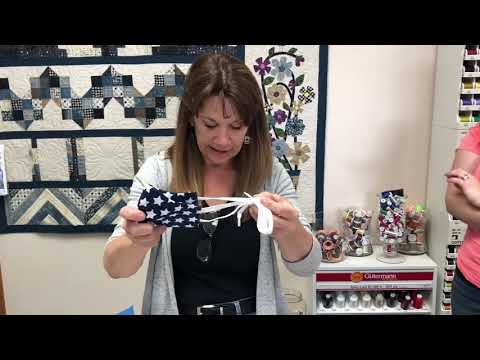
Dr. Lynn Jeffers, the president from the American Culture of Plastic Surgeons, pointed out that there is still quite a bit that could be conveyed throughout the eyes, voice and brows.
“I am absolutely mindful that I am far more expressive with my voice After i’m putting on a mask,” claimed Amy Zhang, a producer in Brooklyn who grew in Hong Kong in the SARS era, when masks ended up commonplace. “But it's a weird detail, at any given time wherever we’re all dealing with these kinds of trauma and grief, not to be able to Specific a smile.”
Or can we?
As Dr. LaFrance explained it, it is the social, obligatory smile — “and that is the one which Ladies do one of the most,” she claimed — that has a tendency to be focused on the mouth muscles, conveniently included up by a clinical mask. But a real smile, or precisely what is know in the field as being the Duchenne smile (named for Guillaume Duchenne), a French anatomist who discovered it, requires equally the mouth as well as the eyes.
“What’s intriguing,” Dr. LaForce mentioned, is that the facial muscle engaged by a real smile — what’s called the orbicularis oculi — can’t be applied on command.
“So will the mask stifle a smile? No. Not unless it’s a fake one particular,” she reported.